
Does OSHA Reporting Feel Overwhelming?
Does OSHA reporting feel overwhelming? That’s Because It’s Only One of Many Tasks You Do.
Some companies prefer to handle their OSHA record keeping in-house. And we understand why one might think that is the best way to handle this requirement. But, too many times companies leave reporting to the last moment which may result in missing deadlines. Overall, managing OSHA reporting internally is risky and can lead to compliance exposure.
H&A has noticed companies over-report when setting up their ISNetworld® account or other third-party contractor verification requirements. If injuries are over-reported, that company may be excluded from bidding on a project. (As you know, hiring companies that have a TCIR above-industry-average affects the ability to bid jobs.) Over-reporting is an important concern and can cause companies to receive an OSHA inspection. OSHA has a Site-Specific Targeting Program which targets establishments with higher-than-average TRIR/DART rates. So, you can see why it is important to report timely and accurately.
At Hellman & Associates, we deal with OSHA record keeping daily. We believe it is a good idea to allow H&A to review your information for accuracy. For example, H&A completed a routine inspection of a client’s OSHA records. This client reported 11 recordable injuries. Upon review of their loss runs, they actually only had three.
Here’s a breakdown of how this inflated their TRIR/DART rates:
- 11 recordable incidents: TRIR = 14.3 / DART = 7.8
- 3 recordable incidents: TRIR = 2.6 / DART = 1.3
- Industry average: TRIR = 2.9 / DART = 2.0
Since this client had 150,000 hours worked, the TRIP/DART calculations increased their rates almost six times more.
Take away the guessing and last-minute chaos and change to a managed solution which achieves compliance requirements and drives your business to new milestones! Choose ASSUREDCompliance® to protect your business.
ASSUREDCompliance® is an annual partnership that applies H&A’s proven best practices to help your company ensure employee safety and avoid costly business disruptions. The best part? It’s about one-third of the cost of a full-time safety manager. As our partner, your regulatory compliance is guaranteed. If you incur a citation for something we should have managed, we pay for it.
Contact Hellman & Associates to learn more about how we can help you keep your valuable employees safe on the job.
Does OSHA Reporting Feel Overwhelming? Read More »
 Effective March 27, 2023, OSHA will administer penalties on an “instance-by-instance” (IBI) basis for gravely serious violations. Detailed information can be found in the official OSHA memo by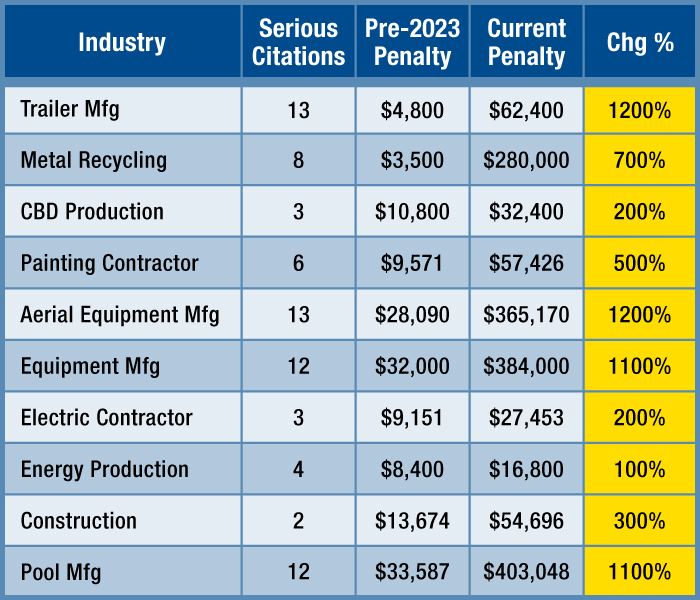
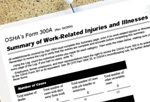 The summary must include the total number of 2022 job-related injuries and illnesses that were logged on your OSHA 300 form. If your company had no recordable injuries or illnesses in 2022, you must still post the form with zeros on the total line. All summaries must be certified by a company executive and remain displayed in a common area between February 1 and April 30, 2023.
 Preliminary data from 2022 has been reported with fall protection (for the 12th year in a row) being the most cited standard. Ensuring safety and the health of employees happens when employers create and maintain a company-wide environment that starts with training and ends with standards compliance.
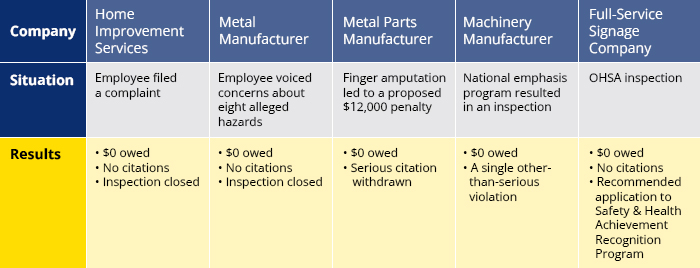
 Hellman & Associates has seen a surge in OSHA regulatory engagement with companies during the past year. When it comes to compliance, Hellman & Associates can be the key to favorable results when facing potential violations. Hellman & Associates helps minimize financial losses when in-house compliance programs come up short.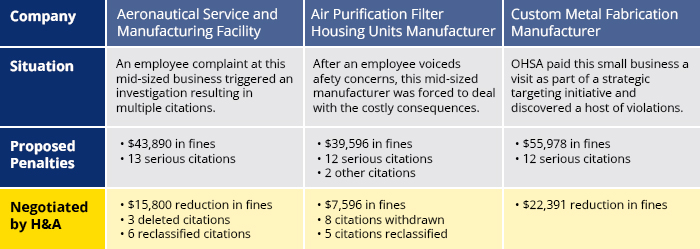
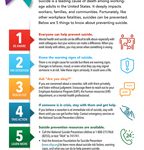
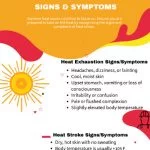 Hellman & Associates’ poster can be printed and place in your workplace. Share it with your employees to help them identify the signs and symptoms of heat stress so they know when to cool down before health risks set in.
  One of the many resources H&A provides you is an online toolbox library. It contains safety topics for general and construction industries. Each topic covers awareness-level information addressing the basics of common workplace safety hazards one can present in person or deliver to staff online.
 In 1996, the National Safety Council (NSC) established June as National Safety Month. The goal of this designation is to increase awareness of the leading safety and health risks with the goal to decrease the number of unintentional injuries and deaths.